
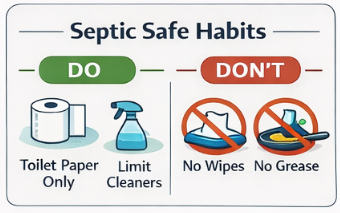
Guide to Septic-Safe Habits
Every day, homeowners unknowingly damage their septic systems by flushing items that seem harmless but can lead to costly repairs. The toilet isn’t a trash can, and your septic system isn’t designed to handle everything that fits down the drain.
Here’s your complete guide to protecting your system with simple, everyday habits.
Why Your Flushing Habits Matter More Than You Think
When Lisa Rodriguez moved from the city to her dream home in rural Colorado, she brought her urban habits with her. Flushable wipes, cotton swabs, dental floss—if it went down the toilet in her apartment, she assumed it was fine for her septic system.
Six months later, she faced a costly repair when those same items clogged her system and caused a backup.
The truth is simple:
Septic systems are biological treatment systems—not garbage disposals.
Everything you flush either:
- Breaks down safely
- Accumulates and causes problems
Understanding the difference can save you thousands of dollars and extend your system’s lifespan.
The Septic-Safe Rule: Keep It Simple
The most reliable rule is also the simplest:
👉 Only human waste and toilet paper should be flushed.
Everything else—no matter how small, soft, or labeled “flushable”—introduces risk.
Why this matters:
- Septic systems rely on bacteria to break down waste
- Non-digestible items accumulate as sludge or scum
- Even slow-breaking materials can overload the system over time
The Never-Flush List: Common Items That Cause Problems
🚫 Personal Hygiene Items (Top Offenders)
- “Flushable” wipes (including baby wipes)
Do not break down like toilet paper and are a leading cause of clogs - Cotton swabs and cotton balls
Float and accumulate in the tank - Dental floss
Acts like string—tangles and traps other debris - Feminine hygiene products
Expand and do not decompose - Condoms
Durable materials that can interfere with system components
🚫 Household Items That Seem Harmless
- Cat litter (even labeled flushable)
Can introduce solids and pathogens - Cigarette butts
Contain toxins and do not break down - Medications
Can affect biological processes in large quantities and are not recommended for flushing - Hair (large amounts)
Can contribute to clogs when combined with other debris
🚫 Kitchen Items That End Up in the System
Even if not flushed directly, these often reach your septic system:
- Grease, fats, and oils
Solidify and restrict flow - Food scraps
Increase organic load beyond system design - Coffee grounds
Settle and accumulate quickly
What Happens Inside Your Septic Tank
Understanding what goes wrong starts with understanding how your system works.
Inside your tank are three layers:
- Scum (top): grease and floating materials
- Effluent (middle): liquid wastewater
- Sludge (bottom): heavy solids
When non-flushable items enter the system:
- They don’t break down properly
- They accumulate in the wrong layers
- They can clog the outlet or move toward the drain field
The Toilet Paper Factor: Not All TP Is Equal
Even toilet paper—the one thing you should flush—varies in how it behaves.
Septic-Safer Characteristics:
- Breaks apart easily in water
- Moderate thickness (avoid ultra-thick varieties)
- Fewer additives (lotions, dyes, heavy fragrances)
Simple Test:
- Put a few sheets in a jar of water
- Shake it
- Let it sit for 10 minutes
If it breaks apart easily, it’s more septic-friendly. If it stays intact, it may contribute to buildup.


Cleaning Products: The Hidden Impact
What you clean your bathroom with can affect your septic system over time.
Use Carefully:
- Bleach (especially in large amounts)
- Strong antibacterial cleaners
- Harsh chemical drain cleaners
More Septic-Friendly Options:
- Mild soaps
- Baking soda and vinegar
- Enzyme-based cleaners
👉 Occasional use of stronger products is generally fine—but repeated heavy use can disrupt system balance.
The Kitchen Connection
Everything in your home drains to the same system.
Key things to avoid:
- Pouring grease down drains
- Overusing garbage disposals
- Excessive use of strong cleaners
These habits contribute significantly to long-term system stress.
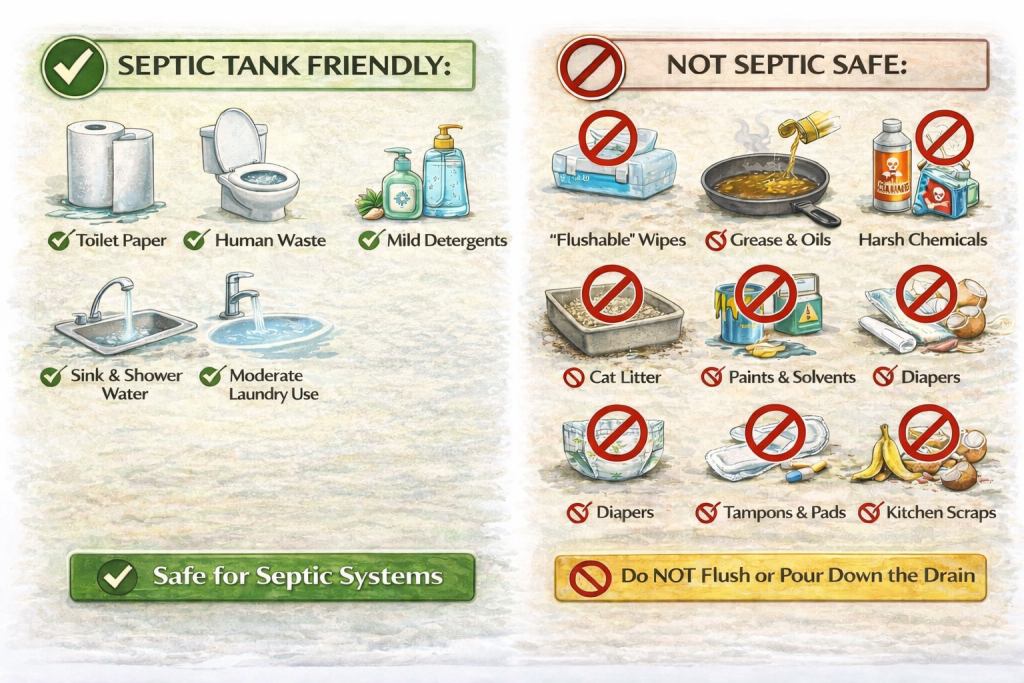
Special Considerations for Families
Teaching Children:
- Keep it simple:
👉 “Only poop, pee, and toilet paper” - Use visual reminders
- Provide bathroom trash cans
Helping Guests:
- Many people aren’t familiar with septic systems
- Small trash cans make proper disposal easy
- A simple sign can prevent costly mistakes
When Mistakes Happen: Damage Control
Even careful households make mistakes.
What to Do:
- Avoid repeated flushing
- Reduce water usage temporarily
- Watch for warning signs:
- Slow drains
- Gurgling
- Odors
When to Call a Professional:
- Large or repeated flushing of non-degradable items
- Signs of blockage or backup
- Any uncertainty about system condition
Creating a Septic-Safe Household
Set Yourself Up for Success:
- Trash cans in every bathroom
- Consistent use of appropriate toilet paper
- Clear household rules
Build Simple Habits:
- Think before flushing
- Keep non-flushables out of reach
- Pay attention to early warning signs
The Long-Term Benefits of Septic-Safe Habits
Good habits don’t just prevent problems—they compound over time.
Financial Benefits:
- Fewer repairs
- Less frequent pumping (when appropriate)
- Longer system lifespan
Environmental Benefits:
- Better groundwater protection
- Reduced system stress
- Lower risk of contamination
Making It Automatic
The goal is to make septic-safe behavior second nature.
- Make the right choice the easy choice
- Use reminders where needed
- Reinforce habits with family
Over time, it becomes effortless.
Your Septic System’s Best Protection: Consistent Habits
A well-maintained septic system can last for decades—but only if it’s treated properly.
The difference between a system that performs reliably and one that fails early often comes down to everyday decisions.
👉 Every item you choose not to flush:
- Reduces risk
- Saves money
- Extends system life
Start with what you flush, and you’ll protect your system for years to come.

