
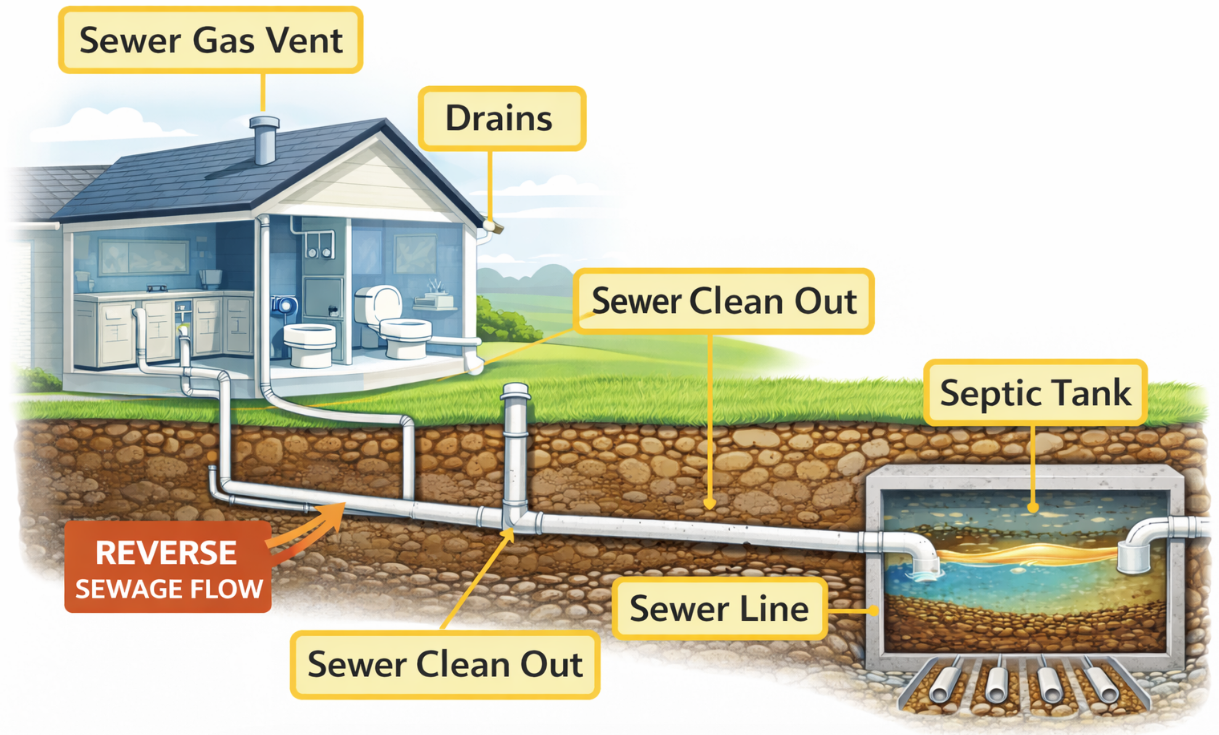
(Don’t Ignore These)
Your septic system doesn’t usually fail without warning. In many cases, it sends signals long before a complete breakdown occurs. The difference between a routine service call and a major system replacement often comes down to recognizing these early warning signs and taking action in time.
Why Early Detection Matters More Than You Think
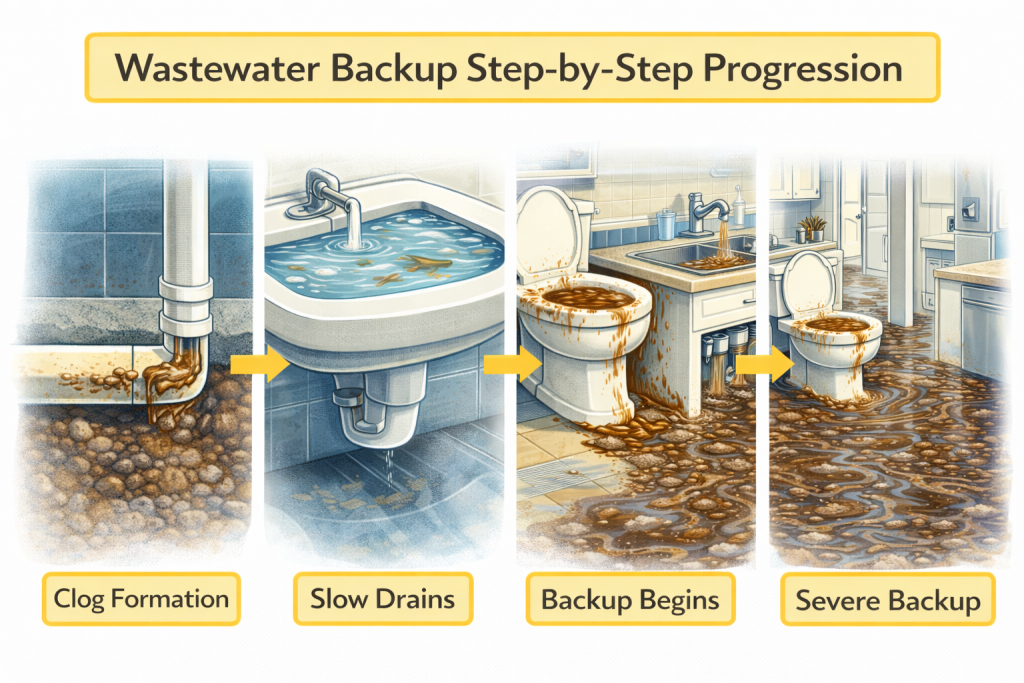
Sarah Chen thought the occasional gurgling from her bathroom sink was just a quirk of an older home. She ignored it for months—until one morning when wastewater backed up through her basement floor drain during a family gathering. What could have been addressed early became a much more disruptive and costly repair.
In many situations, septic issues develop gradually. The key is knowing what to look for—and what those signs may indicate.
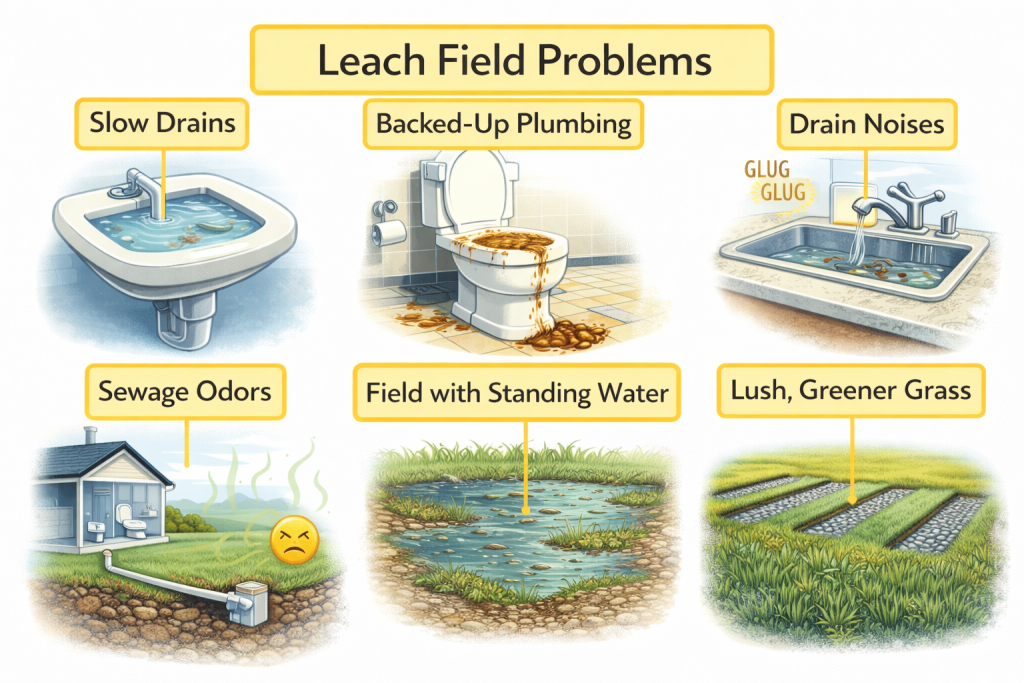
Warning Sign #1: Slow Drains and Gurgling Sounds
What You’ll Notice:
- Toilets that flush slowly or incompletely
- Sinks and showers draining sluggishly
- Gurgling sounds from drains
- Multiple fixtures affected at once
What It May Mean:
These symptoms often indicate that wastewater is not moving through the system as efficiently as it should. Possible causes include:
- Sludge accumulation reducing tank capacity
- Partial blockages in plumbing or piping
- Early signs of drain field stress
Gurgling typically occurs when air is displaced irregularly in the system, often due to flow restrictions.
Typical Progression:
- Occasional slow drainage
- Multiple fixtures affected
- Audible gurgling
- Backup events
Warning Sign #2: Sewage Odors Around Your Property
What You’ll Notice:
- Rotten egg or sewage smells near the tank
- Odors from drains indoors
- Smells in the yard, especially after rain
- Stronger odors in warm weather
What It May Mean:
Septic odors are commonly associated with gases produced during normal waste breakdown. However, persistent or strong odors may indicate:
- Elevated sludge levels
- Venting issues in plumbing
- Drain field saturation
- Minor leaks or system imbalances
In a properly functioning system, gases are typically vented safely through plumbing vents.
A Note on Treatments:
Some homeowners choose to use septic additives designed to support bacterial activity or help manage odors. While experiences vary, these products may help in certain situations as part of an overall maintenance approach.
However, they are not a substitute for proper system function, inspection, or pumping when needed.
Warning Sign #3: Wet Spots or Standing Water Over the Drain Field
What You’ll Notice:
- Soggy ground that doesn’t dry out
- Standing water in specific areas
- Unusually green grass patterns
- Wet areas even in dry weather
What It May Mean:
This is one of the more serious indicators. It suggests that wastewater is not being properly absorbed into the soil.
Possible causes include:
- Excess water entering the system
- Soil saturation or compaction
- Natural buildup in the soil treatment area over time
- System overload
Progression:
- Slightly damp soil
- Persistent wet patches
- Surface water
- System failure
Important: Once wastewater is surfacing, professional evaluation is typically required.
Where Additives Fit (Realistically):
Some products aim to improve how waste breaks down before reaching the drain field. In certain cases, this may support overall system balance. However:
- Results vary widely
- They do not repair a failing drain field
- They should be viewed as a supporting measure only
Warning Sign #4: High Nitrate Levels in Well Water
What You’ll Notice:
- Elevated nitrate readings in well tests
- Changes in water taste or smell
- Notifications from local health authorities
What It May Mean:
This can indicate that wastewater is affecting groundwater quality. It’s a serious issue that requires prompt attention.
Important Context:
- Nitrate movement depends on soil conditions, system placement, and maintenance
- Septic systems are not designed to fully remove nitrates
- Proper spacing and system health are critical safeguards
On Treatment Claims:
Some products are marketed with claims related to nutrient reduction. While certain biological processes can influence nitrogen under specific conditions, typical residential septic systems are not designed to rely on additives for nitrate control.
5
Warning Sign #5: Wastewater Backup in the Home
What You’ll Notice:
- Wastewater backing up through drains
- Toilets reacting when other fixtures are used
- Strong odors indoors
- Basement drain backups
What It May Mean:
This indicates the system is no longer handling incoming wastewater effectively.
Common causes:
- Full tank
- Blocked or restricted piping
- Saturated drain field
Immediate Concerns:
- Health risks from exposure
- Property damage
- Need for urgent professional service
The Role of Preventive Maintenance
Understanding warning signs is critical—but prevention is even more valuable.
Key Preventive Practices:
- Monitor water usage
- Pump based on actual need (not just schedule)
- Avoid introducing harmful materials into the system
- Inspect periodically
Where Additives May Fit:
Some homeowners include septic treatments as part of their routine maintenance. When used appropriately, they may help support bacterial processes or reduce odors in certain systems.
That said:
- They do not replace pumping
- They do not fix structural issues
- Their effectiveness depends on system conditions
A balanced approach—combining observation, maintenance, and informed product use—is typically the most reliable.
What to Do When You Spot Warning Signs
Immediate Steps:
- Reduce water usage
- Avoid overloading the system
- Take note of symptoms
- Arrange inspection promptly
Don’t Wait for Multiple Signs
Even one persistent symptom can indicate a developing issue. Early action often reduces cost and disruption.
The Cost of Ignoring Warning Signs
- Early maintenance: a few hundred dollars
- Moderate repairs: $1,000–$3,000
- Major failure: $8,000–$20,000+
The earlier a problem is addressed, the more options—and savings—you typically have.
5
Taking Control of Your Septic Health
Your septic system provides signals about its condition—you just need to recognize them.
By staying attentive and responding early, you can:
- Avoid major disruptions
- Extend system lifespan
- Protect your property and water quality
The most effective septic care isn’t reactive—it’s informed and proactive.

